hpv cancer
hpv cancer |
- Vaccine uptake and prevalence of HPV related cancers in US men - The BMJ
- Commentary: HPV, the silent virus behind cervical cancer - Channel NewsAsia
- Op-Ed: HPV vaccine can prevent cancer, save lives - New Haven Register
| Vaccine uptake and prevalence of HPV related cancers in US men - The BMJ Posted: 18 Mar 2019 04:27 AM PDT 
In 2006 the US Food and Drug Administration approved a vaccine made by Merck to protect against several cancer causing strains of the human papillomavirus, the nation's number one sexually transmitted infection.12 Initially indicated only for girls and young women, in 2009 the vaccine was also approved for use in boys and young men. (In the UK the NHS provides an HPV vaccine for girls and for men who have sex with men.3) Marketing approval of Merck's vaccine was based on studies showing that it led to a reduction in precancerous lesions on the cervix in women and in anal pre-cancer in men who have sex with men. But while the vaccine protects against several cancer causing strains of the virus, clinical trials have yet to show that it protects against other pre-cancers related to HPV. The FDA therefore does not allow Merck to claim that the vaccine can protect against key morbidities such as oropharyngeal cancer linked to HPV. That's so even though HPV related oropharyngeal cancers, which affect men more often than women, are on the rise in the US and on track to outpace the incidence of cervical cancer in a few years.4 HPV related cancers a threatA study published in JAMA Oncology in 2017 said that "more than 9000 cases of HPV-related cancers occur in men annually, responsible for 63% of penile, 91% of anal, and 72% of oropharyngeal cancers."4 A 2015 paper in Oral Oncology noted that "some estimates suggest that 70-90% of new oropharyngeal cancers have evidence of HPV."5 Also on the rise are HPV related anal cancers, and HPV now beats tobacco use as the …  |
| Commentary: HPV, the silent virus behind cervical cancer - Channel NewsAsia Posted: 16 Mar 2019 03:33 PM PDT SINGAPORE: Cervical cancer is one of the most commonly diagnosed cancer among women in Singapore. A worrying upward trend can be seen from the Singapore Cancer Registry report from 2011 to 2015. A recent national survey by the Ministry of Health (MOH) also showed an increase in Singaporean women aged 30 and above diagnosed with late-stage cervical cancer, with no improvements in the uptake of cervical cancer screening among Singaporean women. SILENT KILLER Cervical cancer is a silent killer. It usually has no symptoms and when they do manifest, the cancer is already in its late stages. Despite having an effective vaccine and screening tool, cervical cancer remains an epidemic worldwide, as the fourth most common gynaecological cancer globally, especially in developing countries. While cervical cancer screening remains a pivotal player in the prevention of this disease, it has to work together with an effective Human Papillomavirus (HPV) vaccination programme. MOVES TO STRENGTHEN CERVICAL CANCER SCREENING In May 2018, the World Health Organisation's (WHO) Director General Dr Tedros Adhanom Ghebreyesu called for the world to commit to a total eradication of cervical cancer. In a timely move towards WHO's goal, the MOH announced last Tuesday (Mar 5), the launch of the free HPV vaccination programme for Secondary 1 girls. Singapore now stands alongside 50 other countries, such as Australia, Canada, Finland, Sweden, Malaysia and the United Kingdom in the global fight against cervical cancer. Along with this announcement, MOH also introduced a more sensitive cervical cancer screening tool to detect pre-cancerous cervical lesions. A HPV DNA test which needs to be carried out every five years will replace the pap smear test, which must be done every three years, as the new national cervical cancer screening protocol for women aged 30 and above.  PERSISTENCE OF HPV VIRUS The HPV is a group of double-stranded DNA viruses extremely common worldwide and can be transmitted through skin contact including genital contact. Women and men who are sexually active will be infected by this virus at some point in their life, though this does not mean that penetrative sex is a necessity for transmission. There are more than 100 types of HPV. Fourteen are recognised to cause cancer. Among them are the HPV 16 and 18 types, which cause 70 per cent of cervical cancer and pre-cancerous lesions. Acute infection including cancer-causing HPV infection does not increase the risk of developing cervical cancer. The issue lies in the persistence of the HPV infection. THE HPV VACCINE AND CERVICAL CANCER PROTECTION The HPV vaccine is a prophylactic vaccine. It protects the host against future cancer-causing HPV infections. It is a viral-like particle, and allows the vaccine to confer immunity without infecting the host. It has a strong safety profile. The most reported adverse effect is pain where the injection occurs. There are three HPV vaccines available worldwide; the bivalent, quadrivalent and nanovalent. While all the vaccines cover HPV 16 and 18 with similar effectiveness, the difference lies in the amount of protection each vaccine can provide, with Gardasil 9 giving the widest protection against 7 out of the currently 14 cancer-causing HPV infection that is known.  HPV vaccines are extremely effective in preventing the development of cervical cancer precursors, offering over 90 per cent protection. But none of these HPV vaccines will provide 100 per cent coverage. Hence, regular cervical cancer screening must still be carried out because it can help to protect against other cancer-causing HPV infections not covered by the vaccine. EARLY VACCINATION IS KEY Still, adopting a school HPV vaccination programme is a crucial move towards the goal of eliminating cervical cancer. Protection is at its best if the vaccine is administered before a woman becomes sexually active. In Singapore, the HPV vaccine is approved for use for young women aged 9 to 26 under the National Childhood Immunisation Schedule, with Medisave coverage of up to S$400. Women up to the age of 45, who are already sexually active, with previous history of abnormal pap smear results or have been treated for pre-cancerous cervical lesions, may also benefit from the vaccine. In October 2018, the US Food and Drug Association (FDA) approved Gardasil 9 to be given to women up to 45. HPV VACCINATION IN SINGAPOREAN MEN There is also emerging evidence of a causal relationship between a tumour-causing HPV infection and the development of cancer in the anus, vulva, vagina, penis and oropharynx. HPV 16 is known to increase the risk of anal, penile and oropharyngeal cancers in men. There is also emerging evidence regarding herd immunity and further reduction of cancer-related HPV infection in girls when the vaccination is also given to boys. Australia has adopted a gender-neutral school HPV vaccination programme and this has resulted in a significant reduction of their cervical cancer and HPV infection rates. READ: HPV vaccine is safe, says cancer agency, slams 'unfounded rumours' In Singapore, Gardasil and Gardasil 9 are licensed to be given to boys between 9 to 26 for protection against genital warts and anal pre-cancerous lesions.  EDUCATION AND AWARENESS Cervical cancer is unique in that we not only now know its main causes but also its long natural history, which allows us to have an extremely effective prevention and screening tool to totally eradicate the disease in Singapore. However, education and awareness are important aspects of our efforts. It is not enough to just have these tools. As a nation we need to commit to using these tools as effectively as possible, to empower and protect our women from this terrible disease. Dr Ida Ismail-Pratt is Consultant at National University Cancer Institute, Singapore's Division of Gynaecologic Oncology.  |
| Op-Ed: HPV vaccine can prevent cancer, save lives - New Haven Register Posted: 18 Mar 2019 10:26 AM PDT 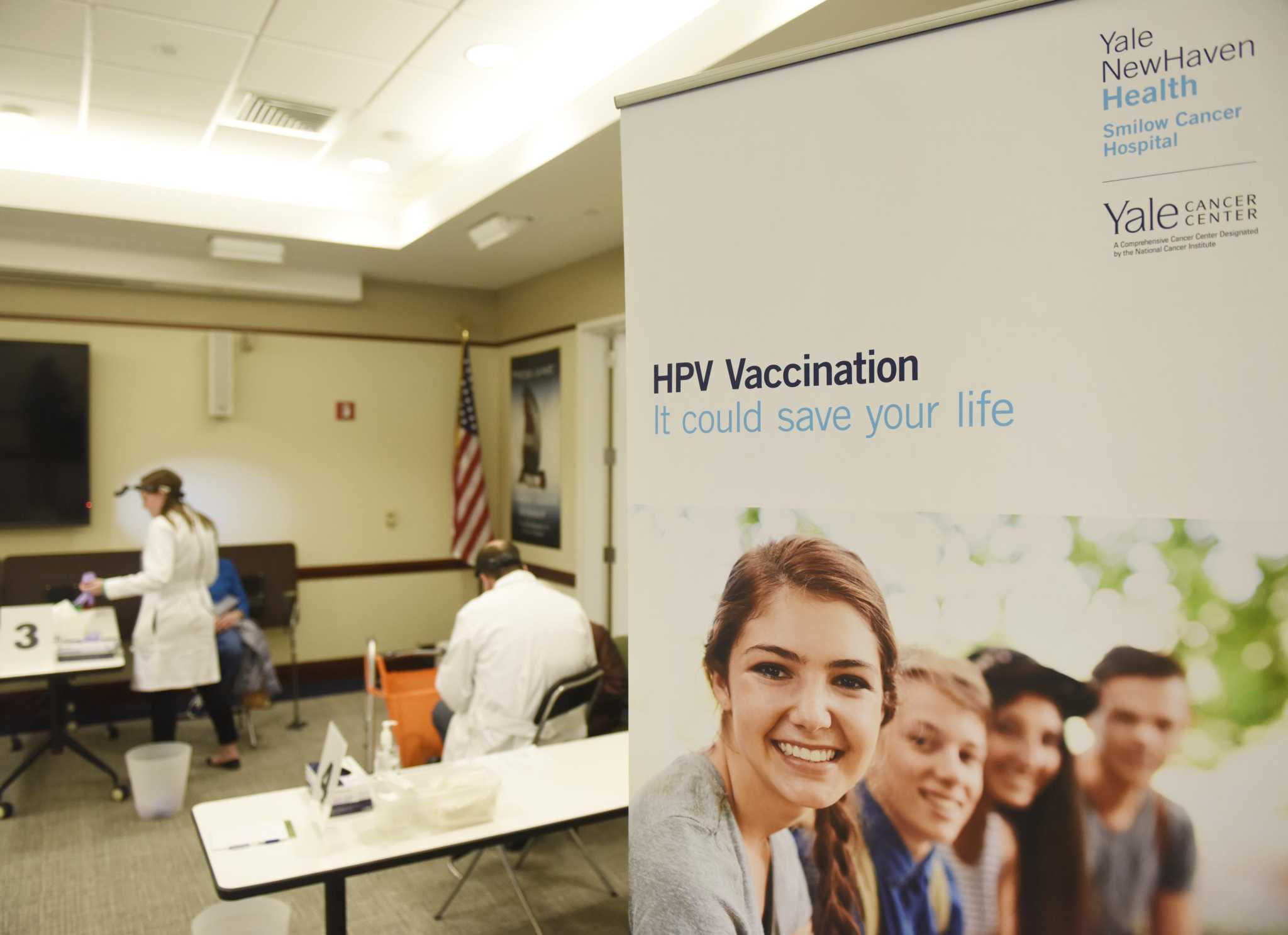
Free head and neck cancer screenings are offered at Greenwich Hospital in Greenwich, Conn. Wednesday, April 18, 2018. Dr. Richard Brauer, Chief of Otolaryngology at Greenwich Hospital, has seen an increasing number of patients with HPV-positive cancer of the tongue and tonsils and believes children and adults should consider getting the HPV vaccine. lessFree head and neck cancer screenings are offered at Greenwich Hospital in Greenwich, Conn. Wednesday, April 18, 2018. Dr. Richard Brauer, Chief of Otolaryngology at Greenwich Hospital, has seen an increasing ... moreLast week, the state Legislature's Public Health Committee hosted a hearing on HB 7199 ("An Act Concerning Immunizations Against The Meningococcal Virus and Human Papillomavirus"). Hundreds of Connecticut residents shared their written and spoken testimonies in support of this bill. Why is this legislation important? As an internist and pediatrician at Yale New Haven Hospital in New Haven and at Saint Mary's Hospital in Waterbury, I feel strongly that this legislation could save lives and suffering in Connecticut. Specifically, this legislation would make the HPV vaccine an opt-out vaccine in Connecticut, meaning that schools would require the vaccine, but also give parents the agency to opt out of its administration. Human Papillomavirus is a virus well-established in the scientific literature to cause cervical, vulvar, vaginal, penile, anal and head/neck cancers. The development of the HPV vaccine has been revolutionary for medicine. The HPV vaccine is the first and only vaccination of its kind to protect women and men from developing cancers associated with HPV. In my practice, I take care of patients of all ages, from children to adults. I have taken care of countless patients with HPV-associated cancer. I also routinely counsel families on vaccines and administer vaccines to both children and adults. This puts me in a unique position to advocate for how I envision that this bill could positively affect our community. As an internist, I have seen men whose faces and necks have been disfigured from head and neck cancer, and who are struggling to cope with their new reality of life after multiple surgeries and chemotherapy. I have seen women with both advanced cervical cancer and vaginal cancer. However, there is one case in particular that will stick with me forever. When I was a newly minted physician on the inpatient oncology service at Smilow Cancer Center, I took care of a patient, who for privacy purposes, I'll call Jane. Jane was in her early 30s and a young mother, with three young children and a doting husband. Jane had metastatic vulvovaginal cancer. If it was not enough that this young, vibrant mother had a lethal cancer, the cancer itself was disfiguring. Jane confided to me that she felt like a monster. Furthermore, the tissue was prone to infections. And it was unimaginably painful for Jane. Despite continuous infusions of strong narcotics, we could not easily control Jane's pain. I would often find Jane spending time with her three young children in the afternoon, the room full of their bright smiles and laughter. However, despite Jane's strength and best efforts to fully engage with her children, I frequently saw her gritting her teeth and holding back tears. The reality of her suffering and premature demise was too much for her to bear. Jane, a loving and young mother, was slowly being torn away from her children's lives. This could have been avoided with a simple vaccine administration. As physicians, we have excellent scientific evidence that the HPV vaccine prevents both HPV infections and cancers caused by HPV. The CDC estimates that there are 33,000 cases of cancer attributable to HPV each year. Many of these are in Connecticut. When I counsel families on the HPV vaccine, I often think of Jane. I advocate for all children to be vaccinated. However, I have found that whereas families quickly accept that their child should and must receive other vaccines (which are required for school), the discussion about vaccination for HPV tends to be more challenging. When parents learn that schools do not require it, the importance of this vaccine feels discredited. Despite my best efforts, I have not been able to vaccinate as many children as I would like. CDC data show that I am not alone in this — statewide in Connecticut we vaccinate children with the HPV vaccine approximately 20 percent less than other vaccines, such as the measles/mumps/rubella vaccine, which are required for schools. From a public health perspective, states such as Rhode Island have demonstrated that opt-out vaccination increases vaccination for HPV. Other studies have clearly demonstrated that vaccination decreases cases of HPV-associated precancerous and cancerous lesions. The Advisory Committee on Immunization Practices of the Centers for Disease Control, the American Academy of Pediatrics, the American College of Obstetricians and Gynecologists and the American Academy of Family Physicians all recommend routine vaccination with HPV for both boys and girls. The vaccine is safe and effective. Connecticut has the opportunity to be a leader in the nation in preventing HPV-associated cancer through opt-out vaccine legislation. We can make a powerful impact on our community in Connecticut with HB 7199. Please consider writing your local senator and representative to help Connecticut enact this change. Ami Belmont is a resident physician in internal medicine and pediatrics at Yale New Haven Hospital in New Haven.  |
| You are subscribed to email updates from "hpv cancer" - Google News. To stop receiving these emails, you may unsubscribe now. | Email delivery powered by Google |
| Google, 1600 Amphitheatre Parkway, Mountain View, CA 94043, United States | |


Comments
Post a Comment