North Dakota could eradicate cervical cancer thanks to high HPV vaccination rates, health department says - INFORUM
North Dakota could eradicate cervical cancer thanks to high HPV vaccination rates, health department says - INFORUM |
| Posted: 30 May 2021 03:45 AM PDT Human papillomavirus, or HPV, is the most common type of sexually transmitted infection in the United States, according to the Centers for Disease Control and Prevention. Many people who contract the virus experience no symptoms, and the infection goes away on its own. For others, HPV can develop into cervical, penile, anal or other forms of cancer. If North Dakota, which had the second-highest rate of HPV vaccinations in the U.S. in 2019, continues to promote the HPV vaccine and regular cancer screenings, it could one day eradicate cervical cancer in the state, said State Immunization Manager Molly Howell. "We do have the potential, through vaccination and also preventative screenings, to completely eliminate a cancer, and that's really exciting," Howell said. More than 90% of cervical and anal cancers are caused by HPV, the CDC says. An estimated 4,300 women nationwide will die from cervical cancer in 2021, according to the American Cancer Society.   The North Dakota Department of Health recommends youth get the HPV vaccine before they turn 13 for it to be the most effective. The vaccine is given in a series, with adolescents under 15 receiving a recommended two doses and teens older than 15 receiving three. In 2019, almost 90% of North Dakota adolescents 13 to 17 started the HPV vaccine series, and 77% of adolescents in the same age group completed the series, according to the CDC. In contrast, the vaccination rate for the entire U.S. in the same year for teens starting the series was 72%, and only 54% of teens nationwide completed the series. The Department of Health credits its high HPV vaccination rate to primary care providers encouraging parents to get their children vaccinated to prevent cancer. "Our health care providers really feel strongly about this vaccine and its safety and its effectiveness, and so they really have a strong recommendation that parents vaccinate their adolescent against HPV," Howell said. Many North Dakota youth receive the HPV vaccine when they get their required immunizations before starting seventh and 11th grade or during their annual high school sports physicals, Howell said. The HPV vaccine is not required in the majority of states, including North Dakota, but at least three states, Washington D.C. and Puerto Rico require the vaccine for students to attend school, according to the National Conference of State Legislatures. The vaccine is not associated with increased sexual activity among adolescents who receive it, according to a study led by the Harvard T.H. Chan School of Public Health published in the journal Pediatrics. Howell said the HPV vaccination rate remained steady throughout the COVID-19 pandemic even though fewer people opted for routine check-up appointments. The pandemic was at the forefront of the Department of Health's messaging and outreach efforts recently, but it hopes to bring additional attention to eradicating cervical cancer and promoting HPV vaccinations in the near future, Howell said. Readers can reach Forum reporter Michelle Griffith, a Report for America corps member, at mgriffith@forumcomm.com.  |
| 10th HPV Summit: A cervical cancer-free future is a battle that must be won - INQUIRER.net Posted: 30 May 2021 08:56 PM PDT This year's 10th HPV Summit themed "A decade of building an HPV and cervical-cancer free Philippines" led by the Cervical Cancer Prevention Network of the Philippines (CECAP) in partnership with the Asia & Oceania Federation of Obstetrics and Gynaecology (AOFOG), Philippine Obstetrical and Gynecological Society (POGS), and the Department of Health (DOH) discussed the WINS, WHAT'S NEXT, and WAY FORWARD to achieving the DOH's vision for a cervical cancer-free Philippines by 2040.
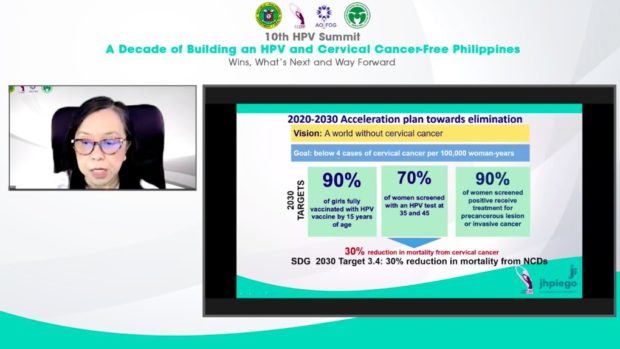
Cecilia Llave Chair of CECAP and Dr. Ingrid Magnata, Country Manager of Jhpiego discussed the 2020-2030 acceleration plan towards a world without cervical cancer. To achieve the goal of less than 4 cases of cervical cancer per 100,000 women by 2030 or 30 percent reduction in mortality from the disease, a holistic approach is vital and this includes HPV vaccination, screening and treatment of pre-invasive disease, treatment of invasive cervical cancer, and symptom management and palliative care. This goal is also supported by the DOH's Cancer Supportive Care and Palliative Care Medicines Access Program (CSPMAP). Dr. Magnata noted that 9 in 10 of new cervical cancer cases occur in low-to-middle-income countries (LMIC) where there is limited access to vaccination and screening. FEATURED STORIES
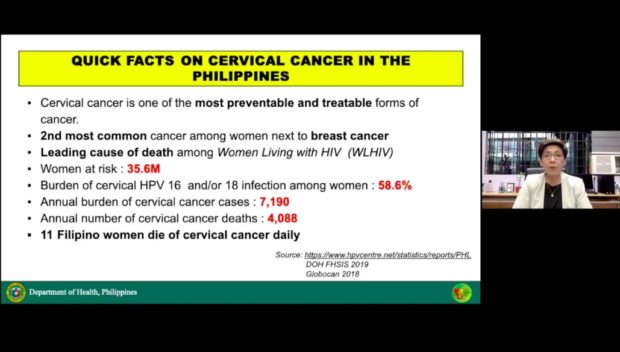
Human papillomavirus (HPV) causes most cases of cervical cancers and pre-cancerous cervical lesions. Genital HPV is a common virus spread mainly by skin-to-skin contact during sexual activity which may have no visible signs or symptoms. At least 14 types of HPV have been found to be cancer-causing. These HPV-related cancers and diseases are cervical cancer, vaginal and vulvar cancers, penile cancer, anal cancer, oropharyngeal cancer, and genital warts. Cervical cancer is one of the vaccine-preventable and treatable forms of cancer, yet it continues to be the second most common cancer next to breast cancer among Filipino women, according to Dr. Rosario Vergeire, Undersecretary for Public Health Services of the DOH. Roughly, more than 7,000 new cases of and more than 4,000 deaths due to cervical cancer are expected to occur every year. An estimate of 11 Filipino women die of cervical cancer daily.
Prof. Kazunori Ochai, President of the Asia-Oceania Federation of Obstetrics and Gynaecology (AOFOG) emphasized that vaccination is still considered one of the most optimal strategies in guarding against HPV. He said regular screening is also highly recommended to detect pre-cancerous lesions caused by types of HPV not covered by present vaccination and also to protect unvaccinated women from areas where coverage is low. This includes pap smear or visual inspection with acetic acid, and treatments for pre-cancerous lesions and cervical cancer in a single-visit approach (SVA). An example of an effective immunization system backed by multi-stakeholder collaboration is the DOH's free HPV vaccination for young girls aged 9 to 14 years old in the School-Based Immunization (SBI) program. This program has been shifted to Community-based Immunization Program due to the COVID-19 pandemic. Once face-to-face classes resume, HPV vaccination will revert back to the initial SBI protocol implementation. Dr. Patrick Tejano, Program Manager of the National Immunization Program of the Department NIP Program Manager of the DOH emphasized the importance of getting early immunization especially for young women, before they are exposed to HPV. HPV vaccine can help protect girls against the burden of cervical cancer later in life. It was also noted in the summit that currently, there are several health laws that play a vital role in the implementation of the holistic model of cancer care. First is the Universal Health Care (UHC) Act, which states that every Filipino shall be granted eligibility and access to preventive, promotive, curative, rehabilitative, and palliative care for medical, dental, mental, and emergency health services. Another law is the National Integrated Cancer Control Act (NICCA) which provides for the prevention and control of cancer by improving survivorship through scaling up programs like primary prevention, early detection or screening, prompt and accurate diagnosis, treatment, surveillance, survivorship care, rehabilitation, and hospice care.
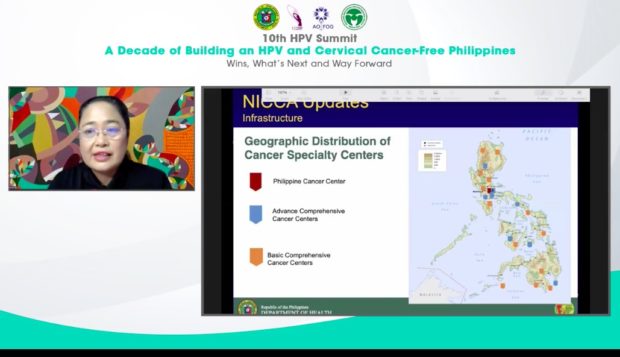
Dr. Mae Dolendo, member of the National Integrated Cancer Control Council discussed the updates on the NICCA. Dr. Dolendo shared that the Philippine Cancer Center (PCC), which shall serve as a national specialty center for cancer, is set to open in 2025. The PCC management office has already been established. ADVT Read more Business stories: Excalibur Builders keeps up with high demand for luxury homes Avida Land delivers future-proof communities, offers best value homes in VisMin Setting sights towards the South Read Next EDITORS' PICK Don't miss out on the latest news and information.   Subscribe to INQUIRER PLUS to get access to The Philippine Daily Inquirer & other 70+ titles, share up to 5 gadgets, listen to the news, download as early as 4am & share articles on social media. Call 896 6000. For feedback, complaints, or inquiries, contact us. |
| You are subscribed to email updates from "hpv symptoms" - Google News. To stop receiving these emails, you may unsubscribe now. | Email delivery powered by Google |
| Google, 1600 Amphitheatre Parkway, Mountain View, CA 94043, United States | |


Comments
Post a Comment