At-home STD tests: How they work, pros and cons, and more - Medical News Today
At-home STD tests: How they work, pros and cons, and more - Medical News Today |
| At-home STD tests: How they work, pros and cons, and more - Medical News Today Posted: 28 Apr 2021 12:00 AM PDT 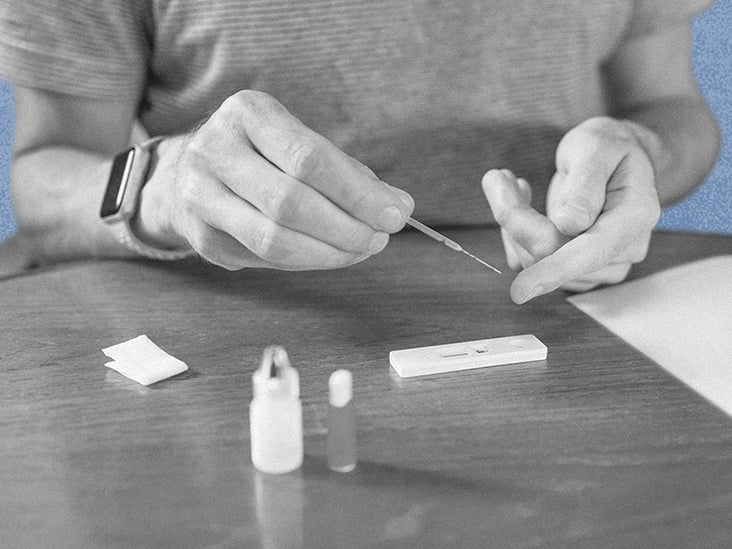 We include products we think are useful for our readers. If you buy through links on this page, we may earn a small commission. Here's our process. Sexually transmitted infections (STIs) are infections that an individual can contract from another person through sexual contact. Many companies offer home testing kits for STIs. This article explores the different types of home STI tests, with some products to consider. It will also look at some pros and cons of using these home tests. Please note that the writer of this article has not tried any of these products. All information presented here is purely research-based. There are two types of at-home STI tests: self-collection and lab-based tests. Self-collectionAfter receiving their test kit from an online provider, people can take the STI test with all the provided tools. These may include needles, tubes, alcohol swabs, and a prepaid envelope, among others. An individual might need to take a blood or urine sample or a rectal, oral, or vaginal swab, depending on the STI test they are undergoing. They then return their sample to a testing center. Lab-basedIndividuals receive a lab requisition and present it to a testing facility, where a healthcare provider performs the test. Individuals generally receive results from both tests via email or through the company's patient portal within a few days. People may also purchase individual tests that they can use to test for one STI or a kit that tests for multiple conditions. The National Coalition of STD Directors states that home tests undergo validation testing to help ensure their accuracy. Companies also need to make sure that the shipping and stability of samples in transit do not affect the integrity of tests. In addition, the Centers for Disease Control and Prevention (CDC) claims that the Clinical Laboratory Improvement Amendments of 1988 (CLIA) has established the quality standards for laboratory testing and an accreditation program for clinical laboratories. However, not all online testing companies have received certification with CLIA. Therefore, a person may wish to look for this certification when looking for tests to buy to verify their accuracy and quality. The CDC mentions that STI tests may be beneficial for people who may have an increased chance of contracting an infection. They include:
The CDC also states that taking an STI test during pregnancy may help prevent complications. It is important to note that STIs do not always trigger symptoms. However, people may take a test if they experience: Individuals may wish to undergo a test if they believe they have had exposure to an STI. Some advantages of home tests, compared with lab tests, include:
Some disadvantages include:
The CDC states that chlamydia is the most common STI in the United States, which can affect people regardless of their sex. According to Planned Parenthood, it can cause: The CDC states that those who receive a diagnosis for chlamydia should take another test 3 months after treatment. This is because retests may prevent onward transmission and complications. Sexual partners of a person who receives testing should also undergo testing and treatment if required, so the infection does not pass back and forth or on to others. Learn more about chlamydia here. Two home tests for chlamydia include: HealthLabsHealthLabs offers lab-based testing, so once people receive the lab requisition form, they can take it to one of their 4,500 testing centers. They claim their laboratories are CLIA-certified, meaning they have obtained federal certifications. People may choose to provide a blood or urine sample — the latter can check for bacterial infections in the urogenital area. The blood test checks whether a person has contracted a nongenital chlamydia infection. It detects Chlamydia trachomatis antibodies and may also reveal past chlamydia infections. Individuals generally receive their results within 1–2 business days. QuestDirectQuestDirect's self-collection home testing kits look for both chlamydia and gonorrhea. There is an additional charge that may cover laboratory tests and follow-up consultations. Once they receive their home kit, people may collect their sample and return it in a prepaid, preaddressed envelope. Results are typically available within 7 business days through the company's patient portal. The platform claims that its laboratories have certification with CLIA and the College of American Pathologists. According to health experts, people with syphilis may have sores, rashes, and ulcers on the genitals and mouth. Without treatment, the condition can lead to blindness and paralysis. Learn about the four types of home syphilis tests here. Two home tests for syphilis include: EverlywellEverlywell offers a finger prick sample collection, providing individuals with all the tools they need to take the test at home. After mailing the sample to one of their CLIA-certified testing facilities, people may receive their results on the company's platform. If a person requires regular testing, they may consider subscribing to the membership plan to save up to 49% off the cost of separate tests. The company claims their tests feature 99% accuracy, and if an individual receives a positive result, a physician may contact them to discuss the next steps. PersonalabsPersonalabs offers lab-based home STI testing, with the help of around 2,300 lab testing centers across the U.S. After purchasing a home test kit, people receive a requisition order that they may have to present at the testing center. Once they provide a blood sample, they generally receive their results within 2–10 business days. Personalabs recommends taking a test if a person does not use any barrier methods each time they engage in sexual behavior. Those with possible syphilis symptoms or who have had sexual contact with a person who has received a diagnosis should also undergo testing. Personalabs states that they work with Quest Diagnostics and that their testing centers are in line with federal certifications. According to the World Health Organization (WHO), HIV attacks a person's immune system. People who have contracted the virus may have an increased risk of developing other infections or diseases. Without treatment, an individual may go on to develop AIDS. Learn how to test for HIV with an at-home test kit here. One option for at-home HIV testing includes the below. OraQuickOraQuick offers an at-home HIV test kit that only detects antibodies after more than 3 months of exposure to the virus. This is the only at-home oral HIV test with approval from the Food and Drug Administration (FDA). The test kit includes a test stick that people use to swab their upper and lower gums. They then insert this into the test tube and read the result within 20–40 minutes. Many of the brands in this article, such as Everlywell, HealthLabs, and Personalabs, offer a range of different STI tests, including options for specific conditions such as herpes, trichomoniasis, or hepatitis. Some companies also sell specialist STI tests. For example, QuestDirect offers STI tests for use during pregnancy. Many of these brands also have comprehensive STI tests that test for multiple STIs simultaneously. This is usually a more expensive option but is more convenient and useful in some cases. LetsGetCheckedLetsGetChecked offers a range of multiple STI tests in collaboration with CLIA-certified laboratories. They provide a self-collection type of testing, meaning individuals collect their sample at home and return it on the same day. Those who require regular STI testing may purchase the subscription plan to save up to 30% off the price of separate tests. People generally receive their results within 2–5 days. They may also contact the company's nurses at any time if they wish to discuss their results and treatment. Those receiving a positive test for an STI should seek medical advice. A doctor may suggest a treatment plan that may help alleviate symptoms and reduce the chances of spreading the infection. People should also consider speaking with a healthcare professional if they wish to discuss their sexual health concerns, such as their risk of STIs. An at-home STI test may be a suitable option for people who wish to undergo convenient and discreet testing. Home tests may offer test bundles, consultations, and retests, while results are generally available within a few days. People should always follow the company's instructions to increase the chances of getting an accurate result.  |
| Tips to Be Fit: HPV: Another virus that we should be concerned about - The Philadelphia Tribune Posted: 13 Apr 2021 12:00 AM PDT  "HPV" stands for human papillomavirus. HPV is the most common sexually transmitted infection in the United States. Most of the time HPV is harmless and will go away by itself. Some types of HPV can lead to cancer and genital warts. There are more than 200 types of HPV. Twenty percent of them can infect your genital area. This includes your vulva, cervix, rectum, anus, penis and scrotum. It can also affect your mouth and throat. At least a dozen variant of HPV can lead to cancer. Variant 16 and 18 are linked to 70% of the cancer cases. Variant 6 and 11 lead to genital warts. More than 30 variants can lead to warts on other parts of your body. HPV causes 99% of the cervical cancers in the United States. The majority of anal, cervical, most cancers affecting the penis and oral cavity (mouth, throat and sinus cavities) can be linked to the human papillomavirus. The Centers for Disease Control (CDC) recorded about 43 million HPV infections in 2018. Most of these infections were among people in their late teens and early 20s. Even if you've been in a monogamous sexual relationship for years, you may unknowingly be carrying the potentially deadly virus. Half of all sexually active men and women in the United States will be infected with HPV at some point in their lives. Most HPV infection goes undetected because they don't cause warts or any other signs or symptoms. Both women and men that are infected can unknowingly transmit the virus during sexual encounters. These can be through the vagina, anal and mouth. Kissing can also be another route of transmission. HPV can lay dormant for many years after a person contracts the virus, even if symptoms never occur. About 10% to 15% of people become infected via nonsexual sources. People with a lowered immune system are at greater risk for developing cancer from HPV. People undergoing chemotherapy, have diabetes, have an autoimmune disease such as lupus or rheumatoid arthritis, or who have multiple sex partners are at greater risk for an HPV infection. The good news is that your body's immune system can effectively eliminate 90% of the cancer-causing variants within two years. When the virus stays in the body more than two years it is considered chronic and increases your risk for cancer. Some ingredients in vaginal spermicides triple a woman's risk for HPV infection. The World Health Organization stated "HPV infection is so common because it can spread without penetrative intercourse — it can be passed on simply through skin-to-skin contact." The CDC recommends that: Get vaccinated. Adolescents should receive the vaccine around age 11 or 12, or before you become sexually active. You can still get the vaccine until age 45. Use barrier methods whenever you have sex. This includes consistent and correct use of barrier methods such as condoms, dental dams or anything that protects from direct genital contact. Avoid sex if warts are present. If there's an active infection, it's still possible for the virus to spread even if a condom is worn. Don't share personal items that make contact with genitals. This includes towels. Reduce or avoid smoking. Smoking can actually increase risk of a wart outbreak. Quitting can be difficult, but a doctor can help create a cessation plan that works for you. Tell sexual partners about HPV status before sexual activity. Ask your partners to let you know if they have any STIs. Ideally, get tested before having sex. All females between the ages of 21 and 65 should get regular pap smears tests. The CDC list three types of screening tests for women: HPV test: A health care professional will test cervical cells for DNA or RNA from high-risk HPV types that can cause cervical and other cancers. Pap test: A health care professional will examine cervical cells to check for cancer or precancerous changes. HPV/Pap co-test: This is a combination of the HPV and Pap tests. One of the questions that came up in putting this article together was the question of cheating. "I tested positive for HPV, did my partner cheat on me?" HPV is very common, and if you're sexually active, it's one of the risks you face. It doesn't mean that you or your partner or previous partners did anything wrong. Partners tend to share strains of the virus between them, which means it's almost impossible to know where the infection started. A second was "Can you use a disinfectant to kill HPV?" A study done at Penn State University states that "chemical disinfectants used in the hospitals and other health care settings have absolutely no effect on killing human papillomavirus. So unless bleach or autoclaving is used in the hospital setting, human papillomavirus is not being killed and there is a potential spread of HPV through hospital acquired or instrument or tool infection." To insure your health you should get regular checkups, take note in any changes that happen to your body and get answers you can understand from your doctor.  |
| You are subscribed to email updates from "hpv symptoms" - Google News. To stop receiving these emails, you may unsubscribe now. | Email delivery powered by Google |
| Google, 1600 Amphitheatre Parkway, Mountain View, CA 94043, United States | |


Comments
Post a Comment