Scientists Develop First Saliva Test That Detects Throat Cancer in Asymptomatic Patients - DocWire News
Scientists Develop First Saliva Test That Detects Throat Cancer in Asymptomatic Patients - DocWire News |
| Posted: 13 May 2020 03:10 AM PDT  Researchers developed a simple saliva test that detects early throat cancer in asymptomatic patients, according to the findings of a new study published the journal Frontiers in Oncology. "The incidence of high-risk human papillomavirus (HPV)-driven throat cancers is on the rise in developed countries and, unfortunately, it is often discovered only when it is more advanced, with patients needing complicated and highly impactful treatment," said QUT Faculty of Health's Associate Professor Chamindie Punyadeera, who, with Dr Kai Tang, developed the test in a press release. In this study, researchers used the non-invasive test to detect HPV-DNA in a saliva sample from an infected healthy person. "The series of saliva tests raised the alert and detected an early cancer before the person had any symptoms," said Prof. Punyadeera. "This enabled removal of the tonsil which had a 2mm cancer in it, by straightforward local surgery alone. "In the US, HPV-driven throat cancers have surpassed cervical cancers as the most common cancer caused by HPV but unlike cervical cancer, up until now, there has been no screening test for this type of oropharyngeal cancer." Professor Punyadeera stated the discovery was made during an HPV-prevalence study, comprised of 665 healthy individuals. "To take the test all the person has to do is give a salivary oral rinse sample. When the test shows HPV-16 DNA, it is repeated and if the presence of HPV-16 is persistent over a period of time we would be suspicious that there may be underlying cancer. "The person whom we reported in this study had been consistently HPV-16 DNA positive for 36 months, with a steadily rising count of HPV-16 DNA after testing at 6, 12 and 36 months. "The patient was found to have a 2mm squamous cell carcinoma in the left tonsil, treated by tonsillectomy. This has given our patient a high chance of cure with very straightforward treatment. "Since the surgery, the patient has had no evidence of HPV-16 DNA in his saliva." "We now have the promise of a screening test for oropharynx cancer and there is an urgent need to undertake a major study to validate this test and the appropriate assessment pathway for people with persisting salivary HPV-DNA."  |
| Promising new HPV saliva test detects early-stage throat cancer - New Atlas Posted: 12 May 2020 06:38 PM PDT 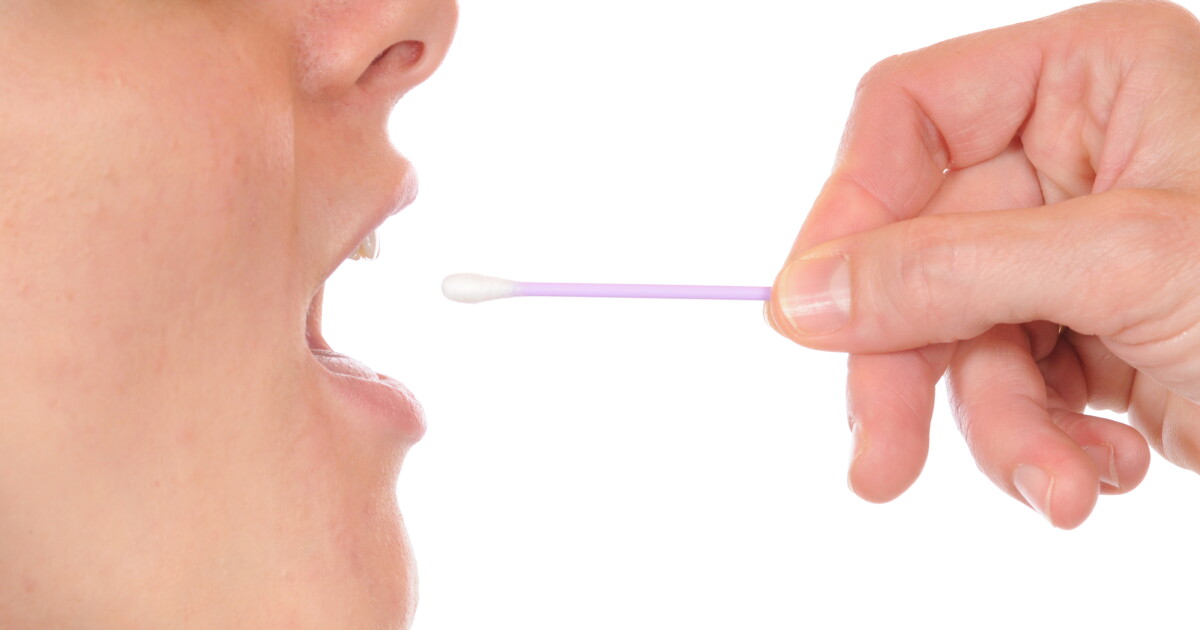 A new case report, published in the journal Frontiers in Oncology, describes the discovery of throat cancer in a subject using a novel saliva test designed to detect human papillomavirus virus (HPV). The patient displayed no clinical cancer symptoms, but the promising saliva screening test needs further validation before broad deployment. "The incidence of high-risk human papillomavirus (HPV)-driven throat cancers is on the rise in developed countries and, unfortunately, it is often discovered only when it is more advanced, with patients needing complicated and highly impactful treatment," explains Chamindie Punyadeera, one of the researchers developing the new test, from the Queensland University of Technology. "In the US, HPV-driven throat cancers have surpassed cervical cancers as the most common cancer caused by HPV but unlike cervical cancer, up until now, there has been no screening test for this type of oropharyngeal cancer." The cancer case was detected as part of an ongoing HPV DNA prevalence study. The trial is following over 600 cancer-free subjects, using the experimental test to measure viral DNA in saliva samples. Of particular focus is a strain of the virus called HPV-16, which has previously been linked to the onset of cervical cancer. The case report describes a 63-year-old man with absolutely no clinical symptoms or signs of any type of cancer. Over 36 months he undertook several HPV-16 DNA saliva tests as part of the prevalence study and the researchers detected significantly rising viral levels as time progressed. Forwarding the subject to an ear, nose and throat surgeon for closer examination revealed the presence of a tiny, asymptomatic tumor in his throat. "The patient was found to have a 2-mm squamous cell carcinoma in the left tonsil, treated by tonsillectomy," says Punyadeera. "This has given our patient a high chance of cure with very straightforward treatment. Since the surgery, the patient has had no evidence of HPV-16 DNA in his saliva." Prior research has suggested high HPV-16 viral loads, detectable in saliva, can be effectively linked with advanced oropharyngeal cancer. However, this is the first time researchers have successfully found an early-stage cancer using the new saliva test technique. The key finding here is the association between increasing HPV viral loads in saliva across several tests and throat cancer. It is this temporal progressive increase in viral load over time the researchers suggest could be key to detecting early-stage oropharyngeal cancer. This finding of course needs wider validation before a test could be clinically deployed. But, considering HPV is thought to be the cause of 70 percent of all oropharyngeal cancers in the United States, and there is no screening method currently available, this easy saliva test could be extraordinarily useful for doctors tracking high-risk patients. "The presence of this pattern of elevated salivary HPV-DNA must be fully evaluated, as it may provide the critical marker for early cancer detection," says Punyadeera. "We now have the promise of a screening test for oropharynx cancer and there is an urgent need to undertake a major study to validate this test and the appropriate assessment pathway for people with persisting salivary HPV-DNA." The study was published in the journal Frontiers in Oncology. Source: QUT  |
| You are subscribed to email updates from "hpv 16" - Google News. To stop receiving these emails, you may unsubscribe now. | Email delivery powered by Google |
| Google, 1600 Amphitheatre Parkway, Mountain View, CA 94043, United States | |


Comments
Post a Comment