HPV Vaccination Rates: The One Factor That Moves the Needle - Medscape
HPV Vaccination Rates: The One Factor That Moves the Needle - Medscape |
| HPV Vaccination Rates: The One Factor That Moves the Needle - Medscape Posted: 31 Jul 2019 07:16 AM PDT The HPV Vaccine WorksIt is unequivocal: The human papilloma virus (HPV) vaccine prevents cancer. It is safe and recommended by governmental and professional societies worldwide. Yet uptake is unacceptably low. This is particularly the case in boys; immunization rates for males aged 9 -26 years have yet to catch up with those of females, a group that also has not met the Healthy People 2020 goal of 80% coverage. This is despite the fact that the vaccine has been recommended for use in boys for a full decade.[1] 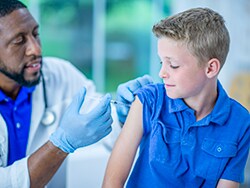 But maybe the tide is starting to turn. A recent study using National Immunization Survey—Teen data collected from 2011 to 2016 offers some hope.[2] The survey is a national random-digit-dialed telephone survey of teens aged 13-17 years and their families. Parents were asked whether they remembered if the child's provider recommended the HPV vaccine. In addition, medical providers of participating adolescents were contacted and asked to supply vaccination histories. Researchers then correlated the parent's response regarding recommendations for the vaccine with information about the child's receipt of one or more doses. In 2016, there were more than 9000 eligible male adolescents in the survey. Here's the good news: In 2016, almost two thirds of these teenagers (65.5%) had received a recommendation from their provider to receive the HPV vaccine, almost quadruple the rate who reported receiving such a recommendation in 2011 (14.2%). There was some variation by race and ethnicity of the child, with non-Hispanic white adolescents being the most likely to receive a provider recommendation (66.6%) and Asian teenagers the least likely (58.6%). Income and maternal education level were positively related with having received a provider recommendation for the HPV vaccine; less than half of teenagers without health insurance (47.9%) were similarly encouraged. Those recommendations do seem to be moving the needle. Between 2011 and 2016, HPV vaccination coverage among teenaged boys increased from 8.3% to 57.3%, which is a significant change. Although several factors contributed to this increase, the receipt of a provider recommendation remained significantly associated even after considering a number of other factors. Older adolescents (aged 16 to 17 years), black and Hispanic adolescents, those with Medicaid insurance, and those with two or more medical contacts in the 12 months prior to the interview were more likely to have been vaccinated. It is no surprise that boys who did not have a well-child visit when they were 11-12 years old were less likely to have been vaccinated. ViewpointI am encouraged by two findings from this study:
This is the glass-half-full perspective. The glass-half-empty view is that a full third of providers, and a similar number of their male adolescent patients, still aren't getting the message, even given the recent nature (2016) of these data. We can address this issue by improving the frequency of health maintenance visits among young adolescents. There are increasing requirements for adolescent vaccines at middle- and high-school enrollment; therefore, targeting young teens with reminder-recall efforts for both health maintenance visits and vaccines, along with making a specific recommendation to receive the HPV vaccine, suggest a promising strategy to address multiple issues at once. Follow Medscape on Facebook, Twitter, Instagram, and YouTube  |
| Microfluidic array catches, holds single cervical cells for faster screening - Science Daily Posted: 30 Jul 2019 08:00 AM PDT Several screening tests for cervical cancer have been developed in recent years. One technique uses immunofluorescent staining to determine the levels of biomarkers to indicate a cell is undergoing HPV-related cancerous growth. Immunostaining for these proteins, however, can be time-intensive. One new approach, discussed in this week's Biomicrofluidics, from AIP Publishing, looks to provide a way to screen cervical cells with immunostaining more efficiently, drawing inspiration from an unlikely source. Researchers have demonstrated a new device that can trap and analyze single cells for HPV-related cervical cancer screening. The device uses an array of wells for single cells to sit in, each with microscopic electrodes lining the bottom, and an electrical phenomenon known as dielectrophoresis to trap those cells for analysis. The design, said author Soo Hyeon Kim, was inspired by the game Pachinko, in which small steel balls navigate a board studded with brass pins toward baskets that denote various prizes. "Major challenges were trapping suspended cells at the single-cell level and analyzing them using antibodies with minimum loss of trapped cells," he said. "By just putting a small structure behind the microwell, the cells were efficiently stayed in the microwells even with the unstable flow used for delivery of reagents." Immunostaining involves creating antibodies that can enter a cell and bind to target proteins and fluoresce. Cells containing higher levels of two proteins related to cellular growth and proliferation, called p16 and Ki-67, reliably indicate the presence of cancerous cells. Such techniques, though, often require researchers to carefully prepare one cell at a time. This can be particularly problematic, since sometimes not all cells from the same cancerous show the same abnormal behavior. The group's approach, called electroactive microwell array with barriers (EMAB), is one of the first to combine electrostatic forces from each well's electrodes with a physical structure that acts as a Pachinko basket for each cell. During experiments, the device effectively trapped 98% of the cells that passed through it and was able to hold on to 92% of them before analyzing them using immunofluorescent staining. Kim said that combining EMAB with p16/Ki67 dual immunostaining could be a useful tool to provide molecular evidence that might help pathologists make a cervical cancer diagnosis. He hopes the technique evolves and can be adapted for use in diagnosing ovarian cancer and circulating tumor cells. The group's next project is to use the device in the clinic. Story Source: Materials provided by American Institute of Physics. Note: Content may be edited for style and length.  |
| You are subscribed to email updates from "hpv 16" - Google News. To stop receiving these emails, you may unsubscribe now. | Email delivery powered by Google |
| Google, 1600 Amphitheatre Parkway, Mountain View, CA 94043, United States | |


Comments
Post a Comment